
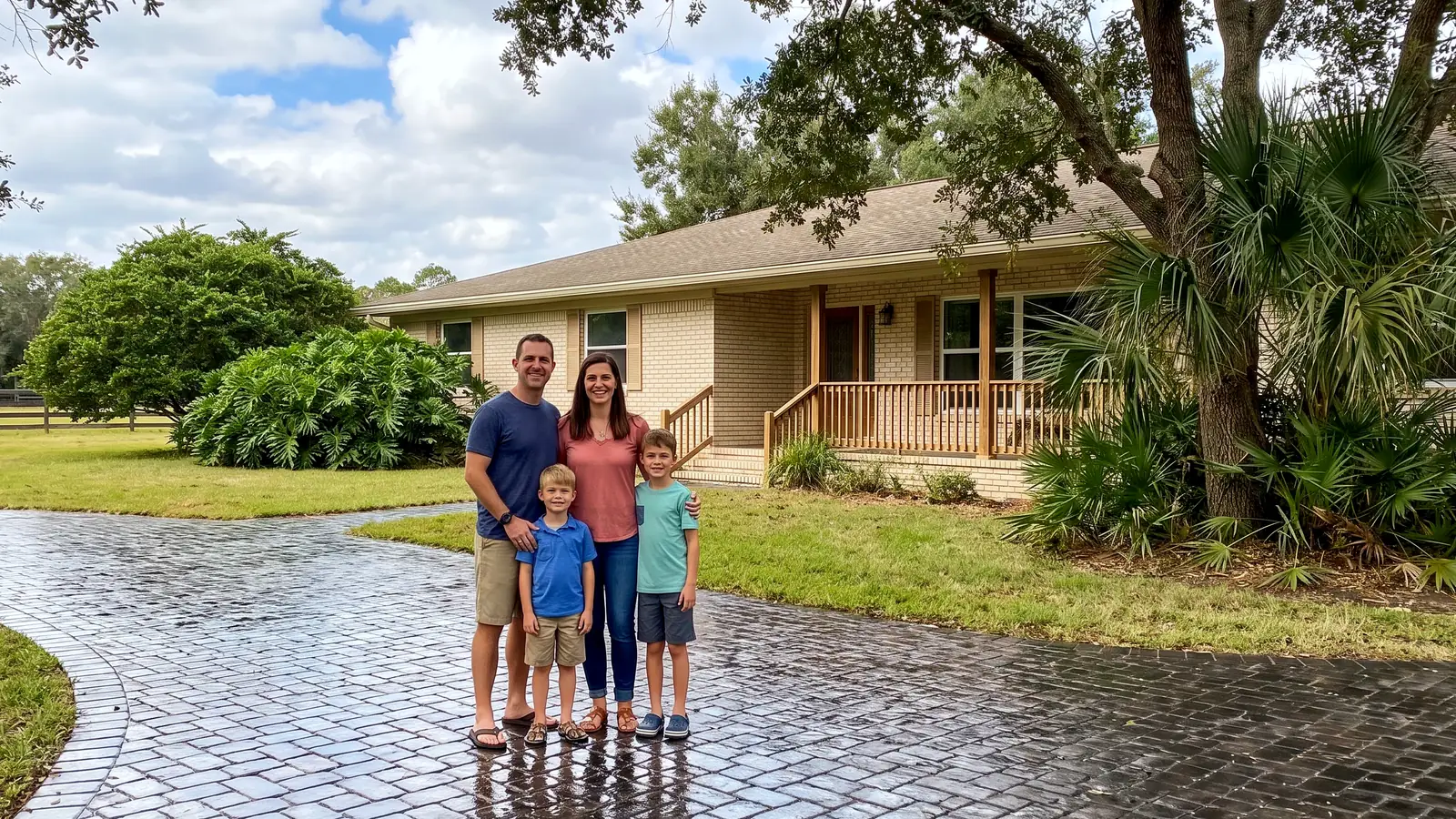
Paver sealing for Venice homes
Paver Sealing in Venice, FL
Venice pavers, from the Italian-style island streets to the mainland, get a free sealing estimate when you call (239) 842-1847.
- Brings out deeper paver color
- Fresh joint sand helps lock pavers in place
- Gives weeds less room to grow
- Makes the surface easier to keep clean
- Free estimate, no obligation
Request a Free Estimate
Free, no obligation.
Fast, careful paver sealing in Venice
Paver sealing in Venice is available with a free estimate for a drive, a pool deck or a courtyard. A local contractor washes off the grime, restores the joint sand and applies sealer. Ring (239) 842-1847 and you will have an answer inside 1 business day, usually much sooner.
Maybe the courtyard pavers behind your home have gone gray, with green creeping along the north wall. A good wash, new sand and a fresh coat bring the original color back. If you would rather write, you can send a quick request.
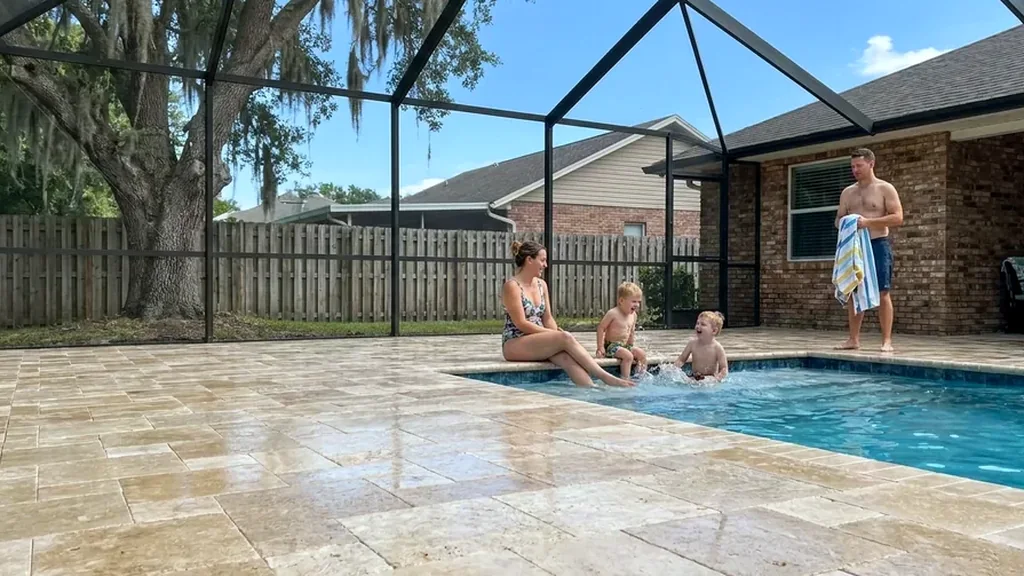
Why hire a local paver sealing contractor in Venice?
Venice splits into the island, with water on both sides, and the mainland beyond the bridges. A local contractor plans for both, so call (239) 842-1847 to hear what that means for your street.
A free look
A free visit covers your Venice pavers, and the price comes before you agree to anything.
A published range
The range that Southwest Florida companies commonly publish is $1.25 to $2.75 per square foot to clean, sand and seal. Hold any Venice bid up against it, so you know whether a number is fair.
Brick, stone or concrete
Tell the contractor what your pavers are made of. Brick, travertine and concrete each call for the right product and wash, so say what you have.
No obligation
You pick the finish and the date. The estimate binds you to nothing, and a reply comes in 1 business day or less.
Get Your Free Estimate in Venice
Tell us about your pavers in Venice.
Free, no obligation
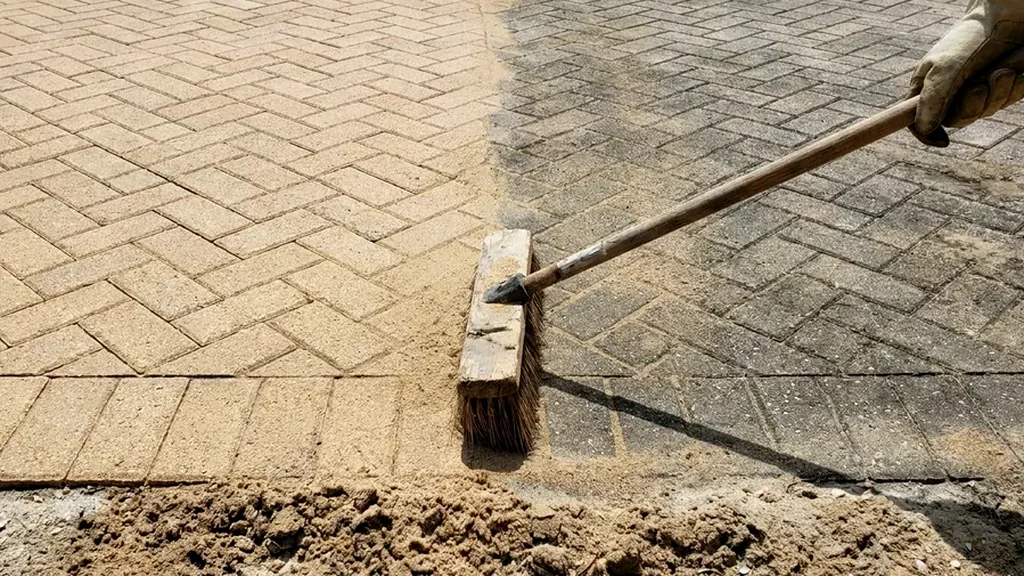
What paver problems show up most in Venice?
Salt from two sides on the island
One local paver company says Venice Island sits between the Gulf and the Intracoastal, with water on both sides, so salt reaches every surface from two directions. Cross the bridge and the salt load drops, but the humidity does not. If your Venice pavers are on the island, have the coat checked for wear. Chalky color and loose film are the signs. A coat that wore thin should be dealt with before it fails, because bare pavers pick up stains fast. Ask the contractor to check the walk and the pool deck as well as the drive. Venice Island is reached by bridges over the Intracoastal Waterway, so every route onto it crosses water. Ask the contractor to check the coat on the sides that face the water, since salt reaches those first. Chalky haze on a brick or paver edge near the water is a cue that the coat needs a look.
Humid summers and heavy rain
Venice has a humid subtropical climate with pronounced wet and dry seasons. Southwest Florida's rainy season, as the National Weather Service defines it, spans May 15 to October 15. Pavers in open sun rarely grow algae, so green film points to damp shade. A north wall or a tree can be the cause, and the wash has to reach it. Mention the damp corners at the estimate. Those are the spots that need the longest wash before any sealer goes on. The climate borders closely on tropical savanna, with a wet season and a dry season that are easy to tell apart. Afternoon storms can drop a lot of rain in a short time, which keeps courtyards and north walls damp. North walls and courtyards stay in shade much of the day, so they hold moisture longer than the open drive.
Joints that lose sand
Joints lose sand in heavy rain, and wider joints let soil in. Weeds root where soil settles into a wide joint. Washing removes joint sand too, so the joints are refilled before sealing. Look along the edge of your drive for bare gaps, and mention them at the estimate, since they show where the sand left first. Refilling those gaps early keeps soil out and keeps the pavers locked together under tires. The Venetian Waterway Park trail runs 9.3 miles along the Intracoastal, a sign of how much of the city sits near water. Bare gaps often show up beside planters and steps, where water runs off the surface. Roots from older trees can lift a paver, and a lifted paver needs a reset before any coat.
Old brick and natural stone
One local company says older Venice homes have original brick-paver drives, many with sealer that has failed at least once, and that homes from the 1920s to 1950s may have travertine or natural stone. Stone and brick call for the right products and gentle rinsing. A water-based coat will not go on top of a solvent-based one. Tell the contractor what you have. If you are not sure what the pavers are, send a photo or let the contractor look. The right answer changes the wash, the sealer and the price. Hotel Venice, built in 1926 with a campanile, is a reminder that the downtown core is about a century old. A photo of the pavers helps the contractor decide whether brick, concrete or stone is under the surface. Stone like travertine is cleaned and sealed differently from concrete, which is why the first question is always what the surface is.
Orange streaks from sprinklers
Orange stains often come from irrigating with iron-rich well water, which is common across Florida. On pavers that looks like rust lines near the sprinkler heads or the wall beside them. Sealer would lock the marks in, so they are treated first. Aim the heads at the lawn instead, and fewer streaks form. Orange on a pool cage frame or a wall beside the drive is worth mentioning. Your county extension service can tell you where to get the water tested for iron. Pool cage frames and walls beside the drive often show the same orange tint as the pavers. Lanai tracks and screen frames collect the same orange tint, so mention them if you see it.
Do Venice Island and the mainland neighborhoods need different paver sealing?
Yes, because the island and the mainland sit in different surroundings. Venice Island is the part of the city reached by bridges over the Intracoastal Waterway, with water on both sides. One local paver company says that puts salt on every surface from two directions. Tell the contractor which side of the bridges you live on when you send a quick request.
On the mainland, Venice East was platted in 1959 and built out through the 1970s, according to the same company, and Venetian Falls has many brick-paver driveways. Mid-2000s communities such as Pinebrook South and Plantation use concrete pavers now on a second or third cycle. When you call (239) 842-1847, name your Venice community.
Downtown, the historic district was planned by John Nolen in 1926 and gained National Register status on September 23, 2009. It runs between Laguna Drive, Home Park Road, the Corso and The Esplanade. Brick and natural stone near homes from that time need gentle rinsing. To ask about a lot in the district, send a quick request.
What does paver sealing cost in Venice?
Companies in the region commonly publish $1.25 to $2.75 per square foot, which covers the wash, joint sand and sealer. A Venice lot can be a small island courtyard or a large mainland drive and pool deck, and the total counts every square foot. Heavy growth and an old coat can push a Venice job up or down the range. For a figure on your Venice lot, send a quick request, and the visit is free.
Natural stone and old brick can change the plan. A contractor may use a different product on travertine than on concrete pavers, and that affects the bid. Access matters on the island too, where a narrow lane can mean carrying gear by hand. Call (239) 842-1847 to ask which of these apply to your lot.
| Paved area | Typical example | Clean, sand and seal |
|---|---|---|
| 300 sq ft | Small patio or walkway | $375 to $825 |
| 600 sq ft | Two car driveway | $750 to $1,650 |
| 1,000 sq ft | Large driveway or pool deck | $1,250 to $2,750 |
| 1,500 sq ft | Driveway plus pool deck | $1,875 to $4,125 |
Math based on the $1.25 to $2.75 per square foot that Southwest Florida paver companies publish. Your contractor sets the actual price after seeing the surface. Repairs, leveling and stripping failed sealer are usually extra.
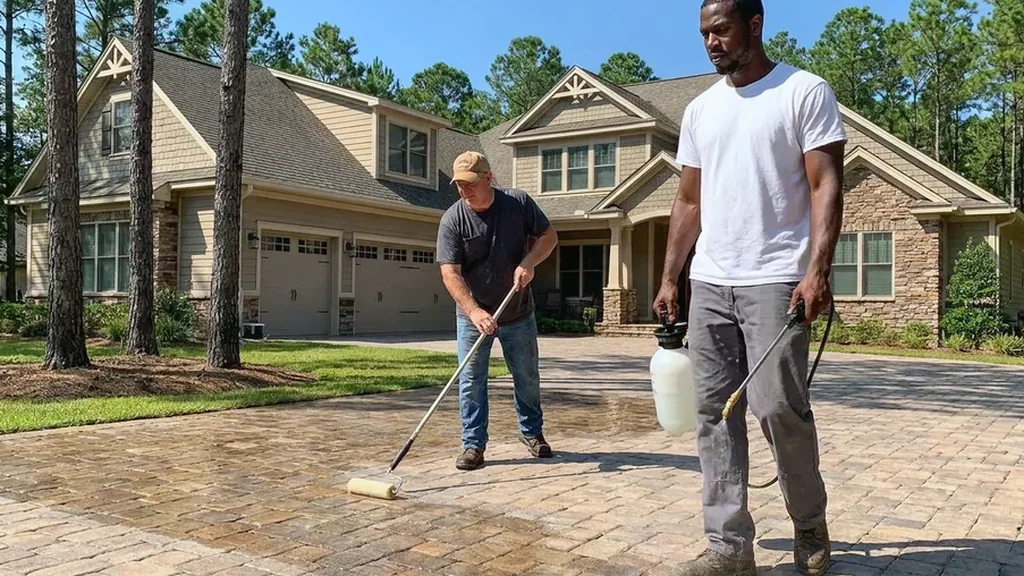
How does a paver sealing job work in Venice?
Look at the surface and ask about past coats
The contractor checks whether your pavers are brick, concrete or travertine, since each takes a different product. Then comes the question of old sealer. The contractor tests for an old solvent-based coat, since it would block a water-based one. Low spots and loose pavers are noted for a reset ahead of the coat. If you can, walk the surfaces together so the contractor and you see the same problems. The estimate should then match what is there. Share photos of old coats or past repairs, which help the contractor plan. The visit covers courtyards and steps behind the house as well as the front drive. If your home sits inside the historic district, mention that too, so the contractor can plan the visit with care.
Wash away the salt haze and green film
The wash clears salt haze and rain grime, along with green film on shaded edges. Rust spots near the sprinkler heads are handled during the wash. On brick or stone, gentle products are used, and no acid goes near travertine. Wall plaster and planters are covered before the rinse starts. Move chairs and pots off the pavers first, and the contractor will say if anything else has to go. Clean pavers take sealer more evenly. Brick and stone near older homes get softer pressure and gentler products. On the island, the wash may take longer where salt film has built up on exposed edges. Brick joints are cleaned gently so the edges are not worn down.
Refill the joints with sand
The wash lifts joint sand out, and fresh sand goes back in before the sealer. Each joint is filled to the top and brushed clean. Sand packed to the top of the joints keeps weeds out and the pavers snug. See whether the written estimate names the joint sand. Joints that sit low beside the garage deserve a second look, since tires push hardest there. Ask the contractor how many passes of sand the joints need. Edges beside planters and steps lose sand first, so the contractor checks them twice. Joint sand is matched to the color of the existing joints where possible.
Wait for a dry window
Sealer needs a dry surface. Summer storms can arrive in the afternoon, so the contractor may start early and watch the sky. A courtyard in shade may take longer to dry than a driveway in full sun. Waiting a day beats sealing damp pavers, which can cloud or peel. Rain in the forecast should bring a call to reset the day. A day lost beats a coat that has to be redone. Venice has a clear wet season and dry season, so ask which months the contractor books. If the morning is humid, the contractor may wait until the surface passes a dry check. A courtyard with walls on three sides can trap humidity, so the contractor checks it twice.
Seal, then keep off until it is ready
The final step is sealer in the finish you chose, matte or wet look. A wet look picks up visible scuffs earlier than matte. In company quotes, a coat tends to be good for two to five years. A Fort Myers company advises waiting about 24 hours to walk on it and 48 to 72 hours to drive on it in summer. Hold off on the sprinklers until the contractor says the new coat can take water. Ask that the estimate name the finish, the number of coats and the product. You walk the finished area with the contractor and point out any spot you want touched up. Ask how the finished area will look when wet, since stone and concrete can darken differently.
Complete paver services in Venice
A Venice job starts with a look and ends with sealer. That order keeps dirt from being sealed in. Brick and stone get the softest wash, which the contractor explains first. For the timing of each stage on your lot, call (239) 842-1847.
Venice homes carry several surfaces: a driveway, a pool deck, a lanai and a front walk. Each wears differently. On a Venice lot, tires scuff the drive, pool water and sun work on the deck, and shade holds damp on the walk. Ask for all of them in one written estimate when you send a quick request.
The two sealer types do not mix, so an old coat decides what can go on. Then you pick matte or a wet look, with the wet look trading some scuffing for color. Ask to see a small sample first, and call (239) 842-1847 to plan the finish for your Venice home.
Venice has wet and dry seasons, and the rainy season runs May 15 to October 15 by National Weather Service dates. Some owners book in the dry months, when pavers dry fast. A dry stretch in summer works too, if the pavers are fully dry, and a new day is offered if rain moves in. To set a date, send a quick request.
Questions to ask before you hire
- Will a mid-afternoon rain shower stop the job, and who reschedules it?
- Do you strip an old coat that has gone cloudy or white, and is that priced separately?
- What do you do about pavers that have sunk where a tree root or a washout pulled the base down?
- Will you cover my pool cage screens and plant beds before you spray?
- Does the quote cover the lanai, the pool deck and the driveway as one job or three?
- How do you keep sealer and wash water out of my canal or pond?
- Do you refill the joints with polymeric sand after the wash?
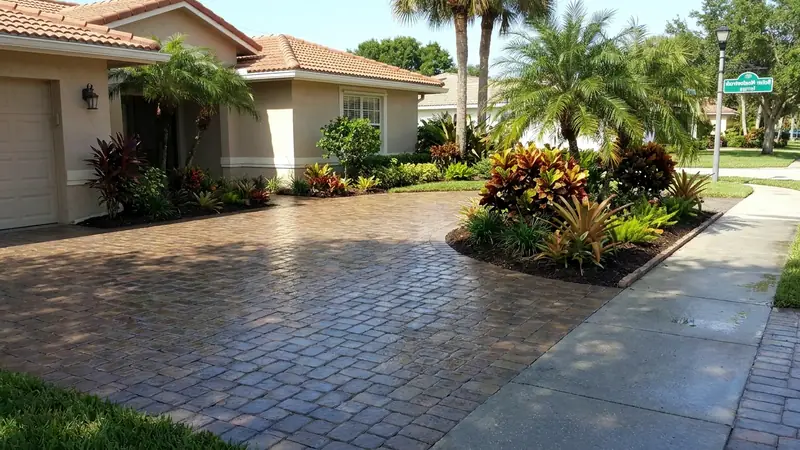
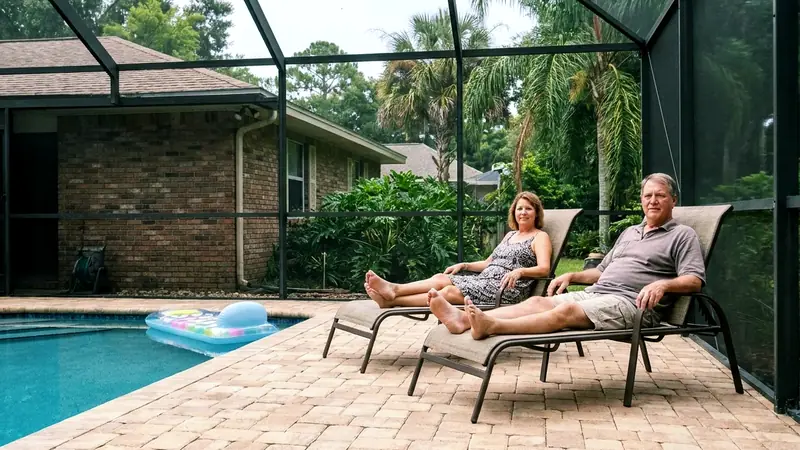
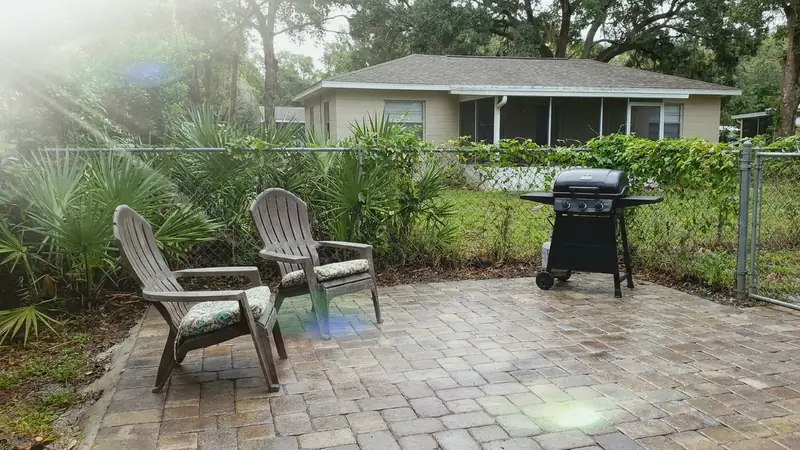
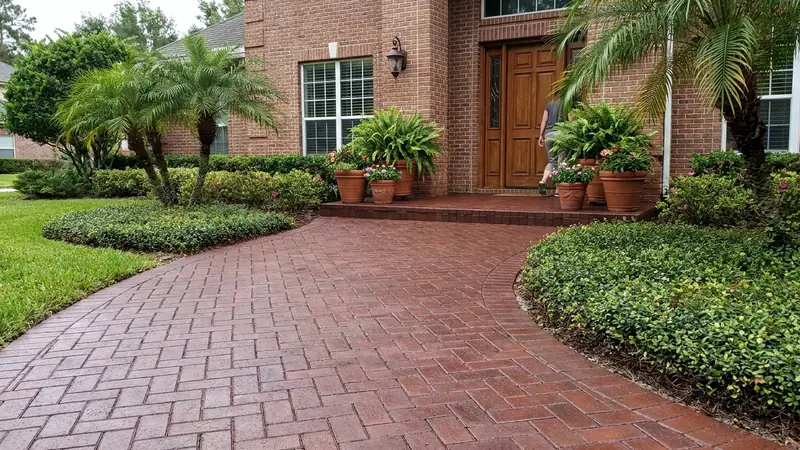
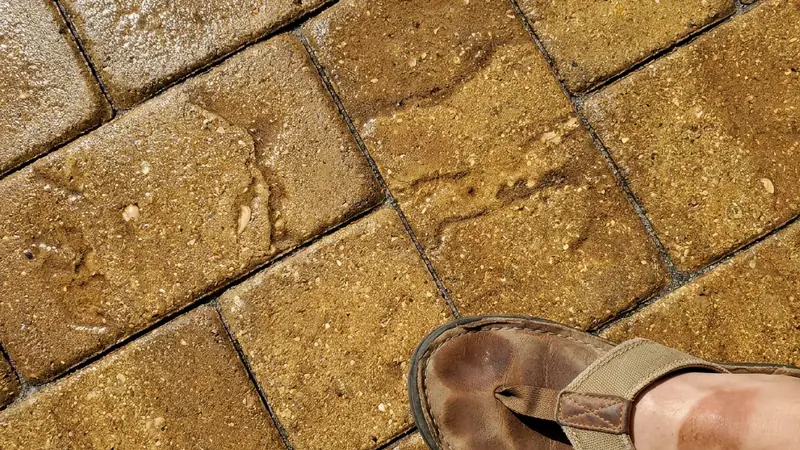
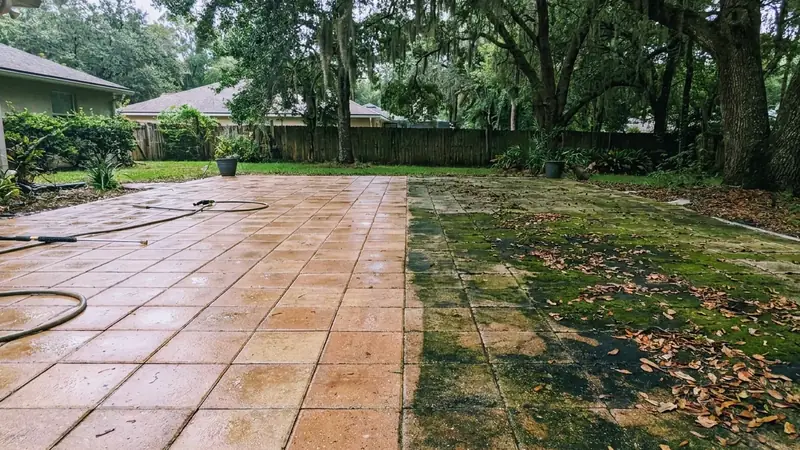
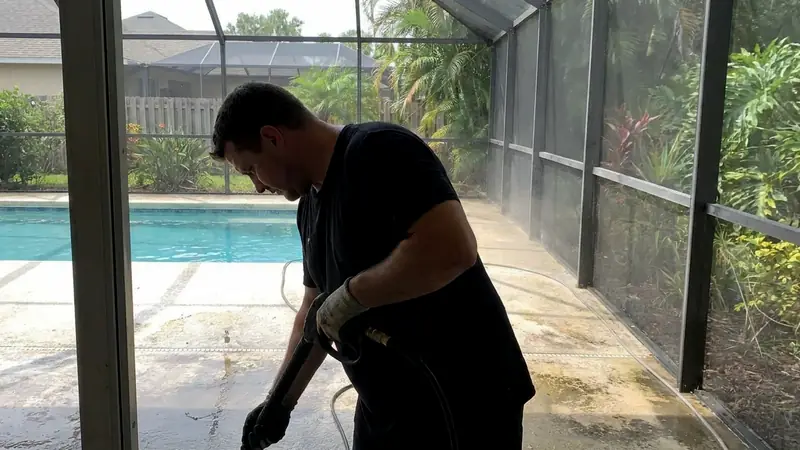
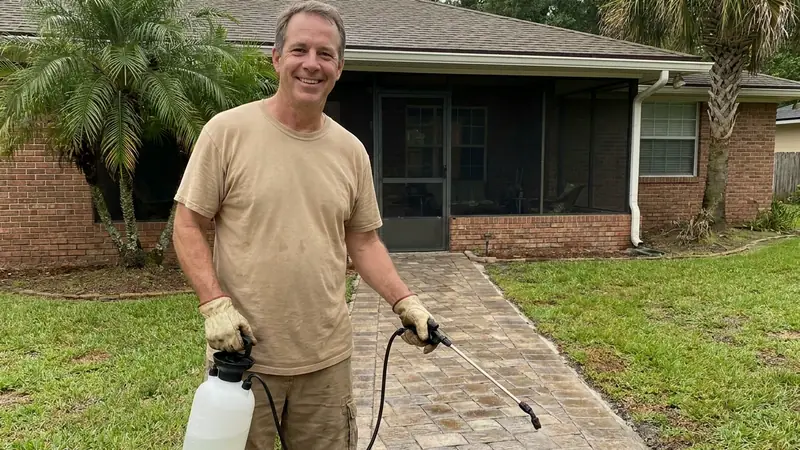
What do sealed pavers look like around Venice?
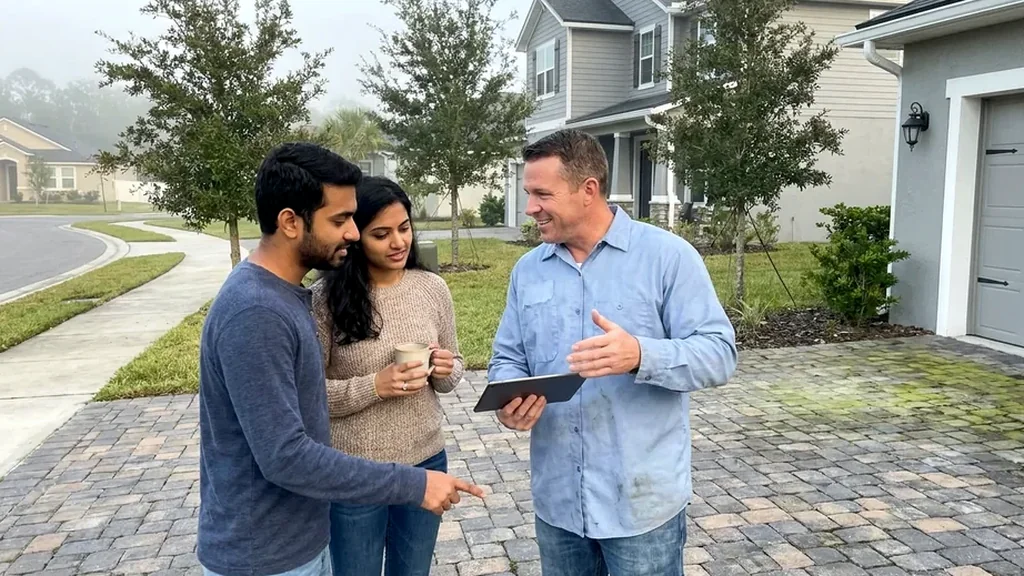
Why local matters in Venice
A contractor who works Venice knows the island and the mainland are different jobs. Salt reaches the island from the Gulf and the Intracoastal, while the mainland deals more with humidity and rain. The checklist changes at the bridge. For a visit from a Sarasota County contractor, call (239) 842-1847.
Age matters downtown, since it hints at what may sit under the pavers. Venice was built in 1925 and 1926 on John Nolen's plan, so a lot near downtown may have brick or stone. A contractor who works the area asks what your pavers are before choosing a product. When the material is unclear, send a quick request and share what you can see.
Gated and active-adult communities across the mainland have their own entry steps and schedules. A local contractor plans for the gate, the parking and the quiet hours. Brick-paver driveways in places such as Venetian Falls are common, per one local company. Call (239) 842-1847 to ask how a visit would work in your community.
Does Venice's planned-city history matter when you hire for paver work?
Yes, because the city was laid out on purpose, and many older lots still reflect it. In the 1920s Fred Albee hired John Nolen to plan Venice, then sold the land to the Brotherhood of Locomotive Engineers, who kept Nolen on. The town was incorporated on July 1, 1926. If you live near the old core, send a quick request.
The 1926 Hotel Venice, at 200 North Nassau, was built in a Northern Italian style with a campanile. The 1926 Youngberg House is an Italian Mediterranean home, and the 1896 Joseph H. Lord House at 409 Granada is the oldest place in the city. Venice Avenue runs to Venice Beach, near a 700-foot pier, so near any of these places, call (239) 842-1847.
Frequently Asked Questions
How much does it cost to seal pavers in Venice?
Companies in the region commonly publish $1.25 to $2.75 per square foot, which covers the wash, joint sand and sealer. Growth, old sealer and surface size place a Venice job within that span. Get the square footage in writing before you compare bids. Compare what each Venice bid lists before you pick the lowest.
How often should you reseal pavers in Venice?
In company quotes, a coat tends to be good for two to five years. On the island, salt may wear a coat sooner than on the mainland. The contractor can inspect the coat and say how much time it has left. Flat color or salt film that returns right after rinsing hints that the coat is thin.
Is it a good idea to pressure wash pavers in Venice?
Yes, as the first step before sealing, because dirt and green growth would otherwise be sealed in. Washing also removes joint sand, so the joints are refilled afterward. Brick and stone call for gentler products than concrete. A contractor can tell you what your surface can handle before the work begins.
Do pavers need to be sealed after power washing in Venice?
They do not have to be, but a washed surface left bare picks up dirt and growth again. Sealing after washing, once the pavers are dry and the joints are refilled, protects the clean surface. The order matters.
Should you seal your pavers in Venice, Florida?
Many owners do, because salt air, humidity and rain wear on unsealed pavers. Sealing slows stains and fade and makes cleaning easier. The trade-off is that sealer needs a new coat every few years. A free estimate lets you weigh that cost against how your pavers look today.
How long does water-based paver sealer last in Venice?
Companies commonly quote two to five years between coats of sealer in general. The product, the shade and the traffic on your pavers all change the answer. Have the estimate name the product and say what span to expect. Shade, traffic and pool splash can all shorten it.
Do brick and travertine pavers in downtown Venice need special care?
Yes. One local company says homes from the 1920s to 1950s may have travertine or natural stone that needs pH-neutral, stone-specific sealing products. A Fort Myers company adds that travertine is sealed with an impregnating sealer. Tell the contractor which stone you have.
Is it safe to put a new coat over my old sealer in Venice?
Not always. Water-based and solvent-based coats do not mix, so the contractor checks what is already on the surface. Mention any peeling or cloudiness when the contractor first looks. If you find an old receipt or product label, pass it along.
Will sealing hide a sunken spot in my Venice courtyard?
No, a coat follows the surface, so a low spot stays low. Reset the spot first, then seal. Pointing out where rain pools after a storm helps the contractor find it.
Ready for a Free Estimate in Venice?
Call (239) 842-1847 and tell us about your pavers.
Free, no obligation